

CNC milling for prototypes
Key Takeaways
- Selecting the right CNC mill requires assessing size, spindle power, and machine rigidity to match your workshop’s production goals and supported materials.
- Total cost of ownership goes beyond upfront price—factor in maintenance, support, upgrade cycles, and downtime to achieve long-term value.
- Software compatibility with major CAM systems ensures smooth workflow integration, efficient programming, and future scalability for diverse manufacturing needs.
- Manufacturer reputation, UK-based support, warranty terms, and spare parts availability are crucial for minimising downtime and securing reliable ongoing operations.
- Compliance with UK safety standards and investment in operator training are essential for reducing risks and ensuring legal and safe CNC mill use.
Buying a CNC mill is a big investment for any workshop or business. Whether someone’s upgrading their current equipment or starting fresh, choosing the right CNC mill can impact productivity and the quality of finished projects. Understanding the key factors before buying a CNC milling for prototypes helps buyers avoid costly mistakes and ensures the machine matches their specific needs.
A CNC mill offers precise and automated cutting, making it essential for anyone working with metal, wood or plastics. Before making a purchase, it’s important to know what features and specifications matter most for different applications.
Understanding CNC Mills
CNC mills operate using computer numerical control systems to automate machining, which increases repeatability and accuracy for metal or plastic parts. These machines read digital instructions, typically in G-code format, and use rotating cutting tools to shape workpieces. CNC mills appear in multiple sizes, from benchtop models for prototyping to industrial machines for high-volume commercial production.
Milling machines include several main components: a spindle holding the cutting tool, a worktable securing the material, precision motors on each axis, and an enclosure for safety. Standard control panels let operators adjust settings, run programs, and monitor progress. Multi-axis variants—such as 3-axis or 5-axis CNC mills—enable complex machining, reducing manual intervention.
Common CNC mill features include automatic tool changers, coolant systems, and live status monitoring. The rigidity of the frame, spindle power (kilowatts), work envelope (measured in mm), and axis travel length impact application suitability and surface finish. According to industry data from the Manufacturing Technologies Association, machines with higher spindle speeds and tight tolerances (below 0.01 mm) achieve superior results for precision components in aerospace, automotive, and medical sectors.
Routine calibration and maintenance extend the life and accuracy of CNC mills, preventing production downtime. Integrating CNC milling reduces lead times and material waste, making it an essential investment for workshops targeting repeatable, high-precision outputs.
Key Factors To Consider Before Buying

Selecting a CNC mill involves several technical and operational factors that affect return on investment and application suitability. Each factor connects directly to requirements for precision manufacturing and efficient workshop operation.
Types Of CNC Mills
Bed mills, gantry mills, desktop mills, and router mills each serve specific machining needs.
Bed mills provide heavy-duty machining with stable vertical spindles—essential in industrial metal fabrication. Gantry mills handle large workpieces like aerospace parts due to their open, spacious structures. Desktop mills offer compact footprints for prototyping or educational settings, suitable for low-volume tasks. Router mills prioritise speed over tight tolerances and work best on wood, plastics, and non-ferrous materials.
Size And Capacity
CNC mills differ in bed size and cutting envelope, which directly constrain workflow and part dimensions.
Industrial mills often use worktables around 1500 x 2500 mm, supporting 8×4’ panels common in woodwork and fabrication. Limited workshop space or low-volume production leads buyers to select smaller mills that occupy less floor area. Larger bed sizes increase throughput by reducing set-ups and enabling the machining of bigger parts in a single pass.
Materials Supported
Spindle power and machine rigidity determine which materials a CNC mill can cut effectively.
Metals like steel and aluminium, plastics and composites form the core supported materials in most CNC shops. Higher spindle power, measured in kilowatts or horsepower, allows cutting of harder materials at greater depths. Lighter-duty machines focus on wood or polymers, using lower spindle speeds and lighter-duty motors, while high-powered industrial spindles extend compatibility to ferrous metals and dense composites.
Precision And Accuracy
Tolerance levels measured in microns or thousandths of an inch impact the final quality of manufactured parts.
High-precision CNC mills achieve tolerances of ±0.001” or better, which reduces finishing and post-processing time, boosting productivity. These machines include ball screw drives, linear guides, and automated calibration features to maintain accuracy over long production runs. Increased precision typically results in higher initial investment but lowers operational costs for complex and tight-tolerance components.
Budget And Total Cost Of Ownership
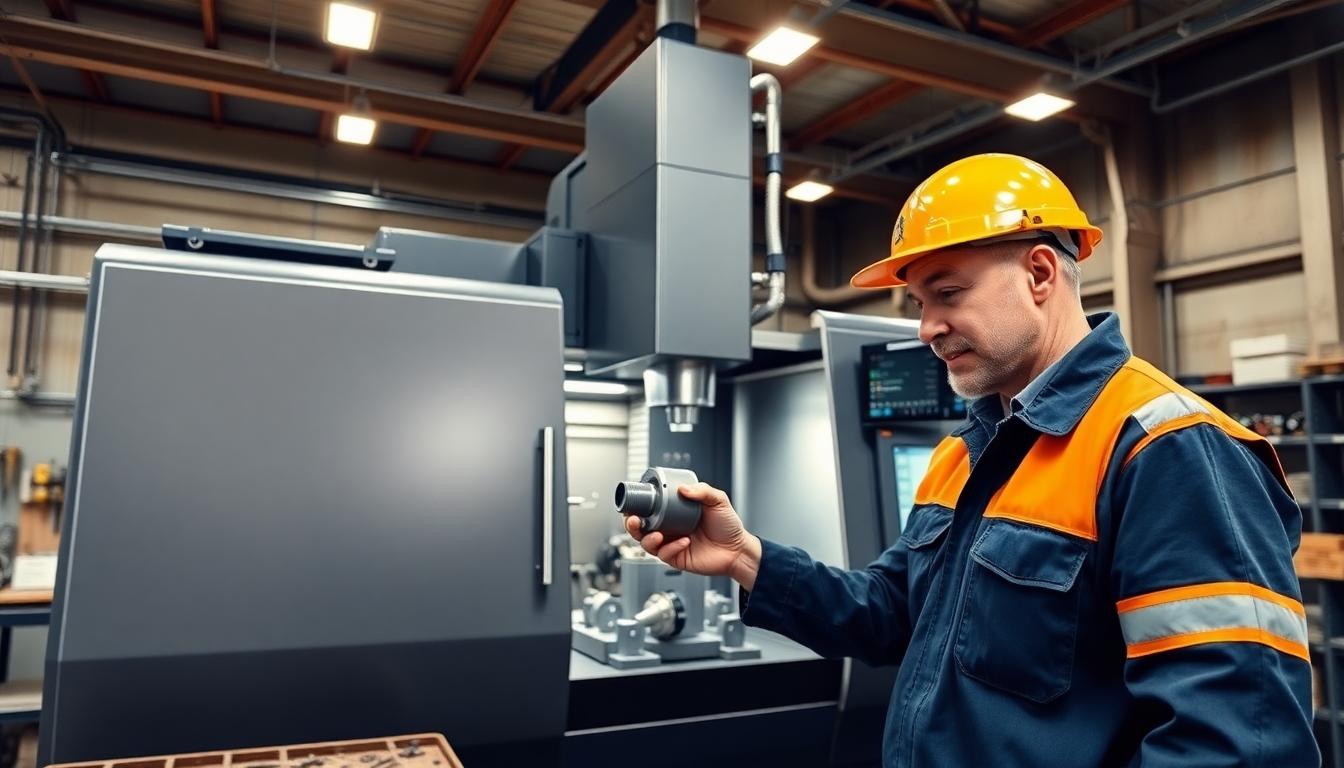
Cost, construction, and ongoing needs have a direct impact when selecting a CNC mill. Budgeting extends beyond the initial purchase price, as lifetime expenses can exceed upfront savings if core requirements aren’t met.
Upfront Costs Versus Long-Term Value
Purchase price changes based on machine type, spindle power, and bed size. For example, desktop CNC mills generally cost less than industrial models due to reduced material capacity and lower spindle ratings. Owners spend more in total over time if their choice leads to frequent downtime or early replacement, which affects business viability. Reliable machines built for scalability and heavy production runs support larger jobs and more material options, driving better returns despite higher upfront costs. Buyers gain value from machines with stronger frames and repeatability, minimising long-term expenditure on repairs and accuracy issues.
| Model Type | Typical Upfront Cost (USD) | Spindle Power Range (kW) | Work Area Size (mm) |
|---|---|---|---|
| Desktop/Benchtop | $3,000–$12,000 | 0.75–2.2 | 300 x 400 to 400 x 600 |
| Mid-Range/Production | $15,000–$45,000 | 2.2–7.5 | 600 x 900 to 900 x 1500 |
| Industrial | $50,000+ | 7.5–40+ | 1000 x 2000+ |
Maintenance And Support
Service agreements, parts access, and technical help influence the overall cost of ownership. Top manufacturers offer fast support, easy sourcing for critical parts, and robust training resources. If users choose a used CNC mill, spindle condition and axis alignment take priority during inspection to reduce the risk of early failure. Scheduled servicing including lubrication, axis calibration, and software updates protects against accuracy drift and downtime. Owners who align machine selection with available support networks and robust manufacturer resources limit disruption and control service expenditure. Having ready access to technical support ensures rapid troubleshooting and quicker returns to production in high-volume environments.
Software Compatibility And Control Systems
Software compatibility shapes how efficiently a CNC mill integrates into existing workflows. Machines compatible with major CAM platforms—such as Fusion 360, SolidWorks, and Mastercam—allow direct importation of digital design files. Efficient integration minimises conversion errors and speeds up production. Control systems fall into two primary categories: proprietary and open systems. Proprietary systems—exemplified by Haas—feature factory-set parameters, streamlined support, and stable firmware, but may restrict third-party upgrades. Open systems provide flexibility for custom programming and software integration, which suits operations needing automation tweaks or unique sequence control.
CAM software should handle complex geometries if the goal is producing multi-axis parts. Machines often come with bundled software licences, but additional seats or upgrades raise total costs. Users benefit from systems supporting regular updates and broad hobbyist or commercial user bases, as those enable consistent troubleshooting and knowledge sharing. Reliable control interfaces contribute to operational uptime by simplifying operator training and error recovery. Network connectivity features improve remote monitoring and diagnostics, which reduce production delays in automated shops.
Selection of a CNC mill based on software and controls affects productivity, operator skill requirements, and compatibility with other shop technologies. Matching software and hardware ecosystems streamlines design changes, shortens lead times, and supports future scalability in busy manufacturing environments.
Assessing Manufacturer Reputation And Support
Evaluating a CNC mill manufacturer involves verifying industry reputation using customer reviews, trade publications, and published case studies with UK end users. Reputable manufacturers demonstrate consistent reliability and machine performance across applications, as detailed by sources like The Manufacturer and leading online user forums.
Prioritising UK-based service networks ensures rapid response for maintenance, repair, and technical issues. Manufacturers with multiple UK service centres—like Haas or XYZ Machine Tools—typically minimise downtime for workshops through on-site support and quicker access to parts.
Documented training programmes and after-sales support, including on-demand software updates and troubleshooting, directly reduce risks of extended production stoppages. Quality after-sales channels provide operators with tailored assistance for both hardware faults and programming queries.
Warranty terms and local spare parts inventory hold critical importance. Manufacturers offering 12–36 month comprehensive warranties and in-country stockholding—such as DMG Mori’s support models—limit operational disruptions and control spare part lead times. Buyers of used CNC mills benefit from service records, clear maintenance histories, and demonstrable care of wear components like ball screws and spindle bearings.
Quality documentation (manuals, programming guides) and active user communities provide ongoing operational support and problem-solving resources. Robust forum participation by the manufacturer and end users accelerates troubleshooting, helping ensure uninterrupted production.
Financial considerations also connect to support reputation; manufacturers partnering with UK financial services—like leasing or deferred payment plans—aid businesses in managing total cost of ownership from purchase through maintenance and upgrades.
Safety And Training Requirements
Safety and training requirements play a critical role in CNC mill selection for UK manufacturing. Machines must comply with UK machinery regulations, such as CE or UKCA marking and PUWER standards, confirmed through verified emergency stops and guarding systems. Every operator uses personal protective equipment—safety glasses, gloves, and hearing protection—to reduce risks from flying debris and noise. Organisational policy prohibits loose clothing and unsecured hair around rotating tools.
Machine operators complete training on safe start-up, emergency shutdown, manual and automatic controls, and hazard identification, with focus on risks such as hot metal, airborne particles, and improper clamping. All operational training adheres to HSE guidance and, where relevant, site-specific procedures for machine isolation and guard adjustment. Safety mechanisms—guards, emergency stops, and brakes—are inspected before and during use, ensuring functional protection.
Technical documentation for each CNC mill matches BS or ISO standards, enabling accurate interpretation of engineering drawings and specifications. Purchase decisions consider compliance with all organisational and regulatory safety documentation requirements, including pre-operation checklists and documented maintenance. This approach helps reduce injury risks and supports consistent, compliant CNC mill operation in busy workshop settings.
About Yijin Hardware
Yijin Hardware, located in Homestead, FL, is a leading provider of precision manufacturing services. Under the leadership of CEO Gavin Yi, the company offers a wide range of solutions, including CNC machining, sheet metal fabrication, and custom fasteners. Additionally, Yijin Hardware provides die casting, injection molding, and 3D printing services, supporting industries such as automotive, aerospace, medical, and energy. Committed to delivering high-quality, reliable solutions, Yijin Hardware helps businesses streamline production processes and achieve precise, durable results.
Contact:
Gavin Yi, CEO
Phone: +1 626 263 5841
Email: [email protected]
Address: 760 NW 10th Ave, Homestead, FL 33030
Website: www.yijinsolution.com
Frequently Asked Questions
What is a CNC mill and how does it work?
A CNC mill is a machine tool controlled by a computer, which automates the precise shaping of metal or plastic parts. It follows digital instructions in G-code to control movements, using components like spindles and motors to cut materials accurately.
Why is choosing the right CNC mill important?
Selecting the right CNC mill boosts productivity, ensures high-quality results, and helps avoid costly mistakes. The right machine supports required materials and applications, reduces downtime, and improves return on investment.
What key factors should I consider before buying a CNC mill?
Consider spindle power, axis travel, machine size, supported materials, accuracy, maintenance needs, and compatibility with your existing software. Also, review manufacturer support and ongoing service costs.
How do different CNC mill types suit various applications?
Bed mills are for heavy-duty jobs, gantry mills handle large parts, desktop mills are good for prototyping, and router mills work well with softer materials or detailed designs. Choose based on your project requirements.
How important is the CNC mill’s size and capacity?
Larger CNC mills can process bigger parts more efficiently and reduce set-up times, but they require more space and a higher investment. Match size and capacity to your production needs.
What materials can CNC mills handle?
CNC mills can machine a range of metals (aluminium, steel, brass) and plastics, provided the spindle power and machine rigidity are suitable. Always check specifications to ensure compatibility with your chosen materials.
What is the total cost of ownership for a CNC mill?
Total cost includes not just the purchase price but also maintenance, support, tooling, training, and potential upgrades. Cheap initial costs can lead to higher expenses if the machine is unreliable or inefficient.
Why is software compatibility important for CNC mills?
Software compatibility ensures smooth integration into your workflow, reduces programming errors, and saves time. Compatibility with popular CAM platforms makes part design and production more efficient.
How does manufacturer reputation affect CNC mill selection?
A reputable manufacturer offers better support, warranties, and spare parts availability, which minimises unplanned downtime and repair costs. Reliable customer service and documentation are also major advantages.
What safety and training regulations apply to CNC mills in the UK?
UK CNC mills must comply with CE or UKCA marking, PUWER, and BS/ISO standards. Operators need thorough training on safety, PPE requirements, and awareness of machine hazards to ensure compliant and safe operation.